
Fulton County Arrest Records and Charges
Fulton County arrest records usually begin with law enforcement. They may identify the person arrested, the agency involved, the complaint or incident number, custody events, and the alleged offense at the time of arrest. The official county sources reviewed did not show a county-published jail roster, booking portal, sheriff app, or mugshot database. For current local custody or transport questions, the Fulton County Sheriff's Office is the local contact point, but court charges are tracked in court records rather than in a booking-only file.
Court charges after arrest are different. The prosecutor decides what formal charges to file, and those charges appear on court dockets and charging papers. In Fulton County, early events can appear at Magisterial District Court, while higher-level criminal cases proceed to the Court of Common Pleas and the Clerk of Courts. The full case outcome, including plea, verdict, disposition, and sentence, belongs with the Fulton County criminal court records file. Arrest records and charge records answer the earlier question: what was alleged and what was filed.
This distinction also affects where to ask for help. The Sheriff's Office can answer local law-enforcement and custody process questions within its authority. The Magisterial District Court can answer docket and hearing questions for summary, traffic, preliminary arraignment, and preliminary hearing matters. The Clerk of Courts is the local criminal filing office once a case is in common pleas. The District Attorney prosecutes criminal cases, but it is not the records counter for certified docket copies.
Search Fulton County Arrest Records
Start with the court trail because Fulton County does not publish a confirmed online arrest blotter. Use Pennsylvania UJS Case Search for public docket information. Use Magisterial District Court dockets for summary cases, traffic-related charges, preliminary hearings, and early criminal complaints. Use Court of Common Pleas docket sheets when charges have moved to the county trial court. Select Fulton County where the search form allows it.
- Search by defendant name or docket number in UJS.
- Check MDJ results first when the event may be a summary offense, traffic charge, or preliminary criminal matter.
- Open the docket and read the charge list, statute, grade, arresting agency, and disposition for each count.
- Check the Court of Common Pleas docket if the MDJ result shows a held-for-court outcome.
- Contact the Clerk of Courts for certified charge records or documents that the public docket does not display.
For booking location or custody status, use official custody channels rather than assuming the court docket proves jail status. The Fulton County inmate records page explains the local roster gap, Pennsylvania DOC locator, and VINELink fallback. The court charge record can show bail and hearings, but it is not the same as a live custody record.
If a search is tied to a recent arrest, check more than one source. The MDJ docket may show the first public court events. A common pleas docket may appear only after charges are held for court. Pennsylvania DOC records apply to state prison custody, not routine local booking. VINELink can help with custody notices where a facility feed is available, but it should not be treated as the official charge list.
Fulton County Charges After Arrest
Charges after arrest become court records when filed through the criminal process. The Fulton County District Attorney is the local prosecutor for criminal matters. The county identifies Hon. Eric Weisbrod as District Attorney, with the office at 116 West Market Street in McConnellsburg. The DA reviews criminal matters after investigation and filing, and the prosecution moves forward through MDJ or common pleas stages depending on the case level.
The official District Attorney source is assigned to this page through the image manifest. The Fulton County District Attorney page is the county source for the prosecutor's office involved in charge filing and prosecution.
That office is important for understanding charging decisions, but the court docket and Clerk of Courts remain the record channels for filed charge information.
| Document | Who Uses It | What It Does |
|---|---|---|
| Complaint | Law enforcement or prosecutor | Starts many criminal matters and lists alleged offenses, complaint number, agency, and basic facts. |
| Information | District Attorney | Formal charging document filed in common pleas after a case moves forward. |
| Indictment | Grand jury process where used | Formal accusation in a narrower set of serious matters, not the routine path for every local case. |
Fulton County Charge Status
One arrest can produce more than one charge. A single charge can also change as the case moves. The first charge list may not match the final outcome. Always read the status and disposition field for each count. A charge can be amended, reduced, withdrawn, dismissed, held for court, resolved by plea, or sent to sentencing. Short docket labels matter because they explain whether the accusation remains active.
| Status | Meaning in a Charge Record |
|---|---|
| Pending | The charge has not reached final disposition. |
| Held for court | An MDJ found enough basis for the charge to proceed to common pleas. |
| Amended or reduced | The filed charge changed, often by statute, grade, or count. |
| Dismissed or withdrawn | The charge did not proceed as filed or was removed from prosecution. |
| Nolle prosequi | The prosecution declined to continue that charge, subject to the court record context. |
| Guilty or not guilty | The charge reached an outcome through plea, verdict, or finding. |
Charge status also affects later searches. A dismissed charge may still appear in historical docket text unless sealed, expunged, or restricted under Pennsylvania law. A pending charge should not be treated as a conviction.
Fulton County Court Charge Fields
Public docket sheets can show more than the offense name. Criminal fields may include an offense tracking number, complaint number, arresting agency, statute section, grade, charge date, disposition, and sentence details if entered. The docket may also show bail, hearings, attorney entries, financials, costs, restitution, and probation details. Some documents are not shown as images online, so the docket can be a roadmap rather than the full file.
- Charge
- The alleged offense filed against the defendant.
- Grade
- The offense level, such as felony, misdemeanor, or summary offense.
- Information
- The formal charge document filed by the District Attorney in common pleas criminal court.
- Disposition
- The result of a charge or case, such as guilty, dismissed, withdrawn, or not guilty.
For a copy that can be used in a legal or official setting, ask the Clerk of Courts for certified copies. A printed web docket is not the same as a certified court record.
Fulton County Charges vs Convictions
Charge records and conviction records are often mixed up. An arrest may lead to charges, but charges alone do not prove guilt. The conviction question is answered only after the case reaches a disposition. A person reviewing Fulton County arrest records should look for the final outcome before drawing conclusions from the charge list.
| Point | Charge | Conviction |
|---|---|---|
| What it is | An accusation filed in court. | A final finding or plea outcome. |
| Where it appears | Early docket and charge list. | Disposition, verdict, plea, or sentencing entry. |
| What to verify | Status, grade, statute, and whether it was amended. | Sentence, costs, restitution, probation, and later appeal or relief. |
Statewide checks can be useful, but they answer different questions. The Pennsylvania State Police PATCH portal is the official state police criminal-history request system, not a live docket search.
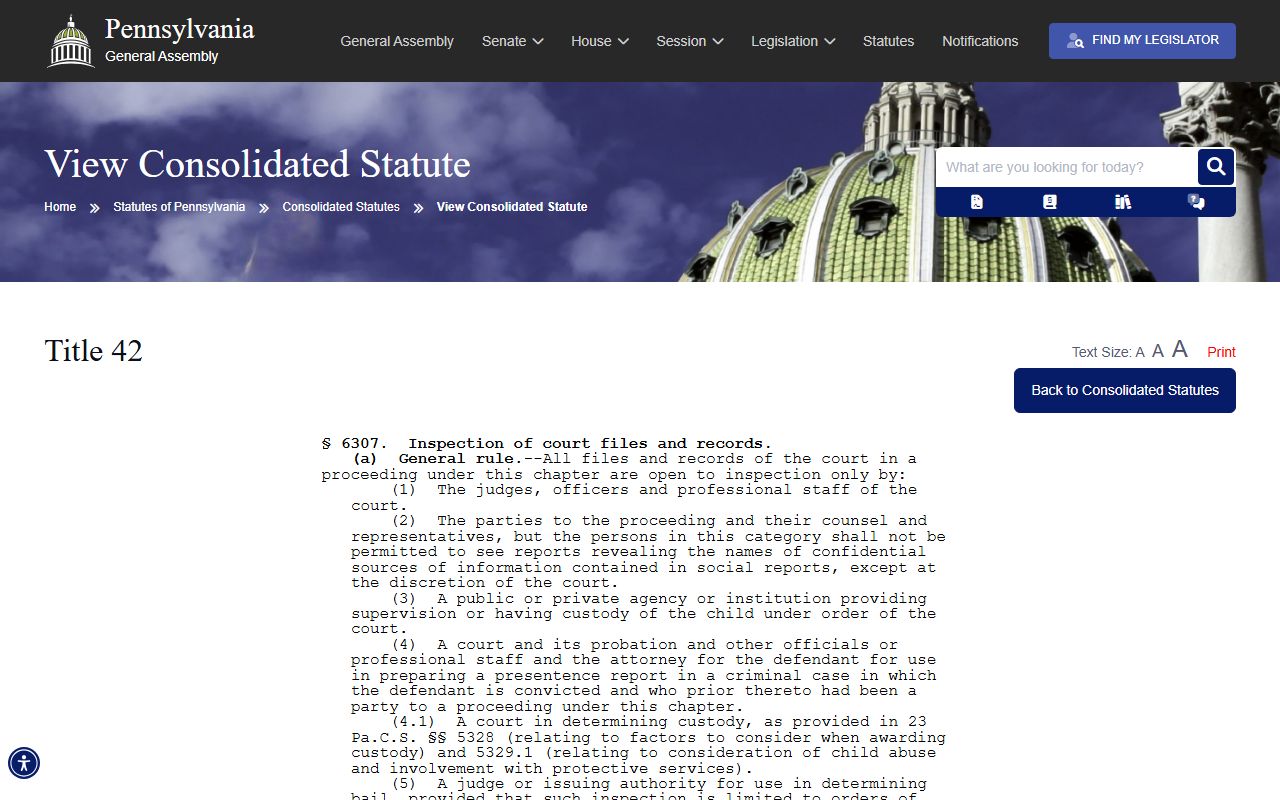
PATCH may help with formal criminal-history requests, while UJS and the Clerk of Courts are better for charge-by-charge docket review.
Statewide Arrest and Charge Checks
Pennsylvania has several statewide sources that can intersect with Fulton County arrest records and charges. UJS is the public court docket path. PATCH is the state police criminal-history request path. The Pennsylvania Megan's Law registry is a public registry for qualifying sex-offender information. Each tool has a separate purpose, so a missing result in one system does not prove that no court case, arrest, or criminal-history record exists elsewhere.
The source image from the Pennsylvania Megan's Law registry is included because registry records are a specific statewide public source that can relate to criminal convictions, not because it is a general Fulton County arrest database.
Use registry data only for its stated purpose. It does not replace a charge docket, sentence order, or certified criminal court record.
Restricted Fulton County Charge Records
Public access has limits. Juvenile records are restricted under 42 Pa.C.S. Section 6307. Sealed records, expunged records, protected identifiers, victim information, confidential addresses, and some abuse-related material are not ordinary public docket content. A charge may also be removed from public view through expungement under 18 Pa.C.S. Section 9122 or limited-access rules under 18 Pa.C.S. Section 9122.1.
Non-court records follow a different route. The Pennsylvania Right-to-Know Law can apply to many county agency records, but court case records are governed mainly by judiciary access policy. For Fulton County arrest records, that means a sheriff administrative request, a court docket lookup, and a certified charge copy request may be three separate tasks. Use the office that created or maintains the record rather than sending every request to one counter.
Note: No official Fulton County sheriff app or app-only warrant, arrest, or booking search was confirmed in the county materials reviewed.